Health & Healthcare
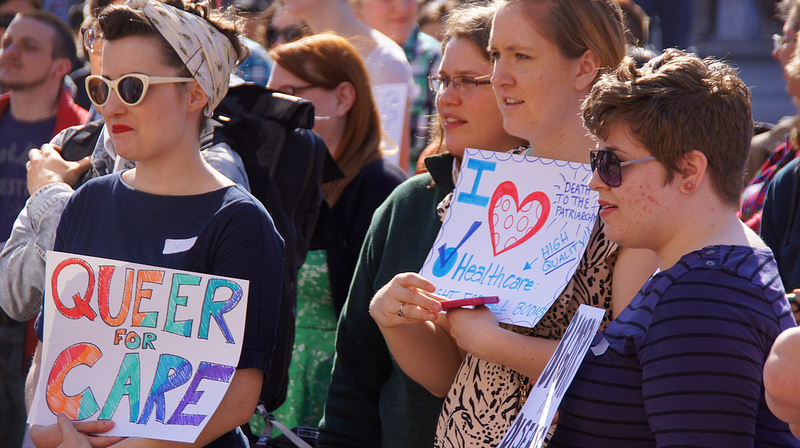
Just like everyone else, transgender people deserve respectful, competent health care—whether that means accessing routine medical services or receiving transition-related care.
Unfortunately, transgender people continue to face widespread barriers and discrimination in healthcare settings. Transition-related care is often stigmatized or dismissed as elective, despite overwhelming medical consensus recognizing it as necessary and, for many, life-saving. Major medical organizations—including the American Medical Association, the American Psychological Association, and the American Academy of Pediatrics—support evidence-based guidelines for transition-related care and oppose any form of discrimination against transgender patients.
Yet, trans people still experience disproportionate challenges. The 2022 USTS Health & Wellbeing Report, based on responses from over 84,000 transgender adults, paints a clear picture: trans people experience significantly worse health and mental health outcomes compared to the general population. Only 66% of respondents rated their health as “excellent,” “very good,” or “good,” compared to 81% of the general population. Over a third (34%) reported their health as “fair” or “poor.” When it came to mental health, 81% said they felt down, depressed, or hopeless at least several days in the prior two weeks—far higher than the national average of 57%.
Transgender people are often denied the care they need—especially gender-affirming care. While 84% of respondents wanted hormone therapy or surgeries, only 60% had ever received them. Even when care is available, access can be geographically limited: trans people were more than twice as likely to travel 50+ miles for transition-related care than for routine healthcare (11% vs. 5%).
Discrimination is a major barrier. Nearly half (47%) of respondents had at least one negative experience with a healthcare provider in the previous year. These ranged from being misgendered to having to educate their provider on trans healthcare. Cost was another common obstacle: 28% of respondents avoided care due to cost, and 24% avoided care out of fear of mistreatment. These challenges were even more acute for Indigenous, multiracial, and Latine respondents, as well as for trans men and nonbinary people assigned female at birth.
Importantly, the USTS shows that affirming care and social support make a profound difference. Trans people who had socially or medically transitioned reported significantly higher levels of happiness, life satisfaction, and overall wellbeing. Nearly all who accessed gender-affirming hormones (98%) or surgeries (97%) said these made them more satisfied with their lives. Those with supportive families were also more likely to report good health (69% vs. 56%) and had substantially lower rates of suicidality. In contrast, family rejection was associated with much higher rates of suicidal thoughts, planning, and attempts.
Victimization and structural transphobia were also strongly linked to mental health risk. While 31% of those who had not experienced victimization considered suicide in the past year, that number rose to 50% among those who were verbally harassed, 53% among those denied equal treatment, and 63% among those who were physically assaulted.
At A4TE, we work with federal, state, and local partners to advance healthcare policies that protect and empower trans people. The 2022 Health & Wellbeing Report is a vital tool in this effort, providing data to inform action and policy change that can help ensure all transgender and nonbinary people have access to the affirming, respectful, and affordable care they deserve.
Featured Resources

US Trans Survey Health & Wellbeing Report
Understanding Essential Health Benefits

Additional Resources
Our Resources
Partner Resources
Latest Updates
View All



Stay Informed
Subscribe to our newsletter to get the latest news and opportunities for action delivered straight to your inbox.
Subscribe