On Intersex Awareness Day, we celebrate trans and intersex solidarity
On October 26, 1996, intersex activists and their trans allies came together for the first time to protest for the right to make their own choices about their bodies. Now, this history of solidarity is more important than ever.
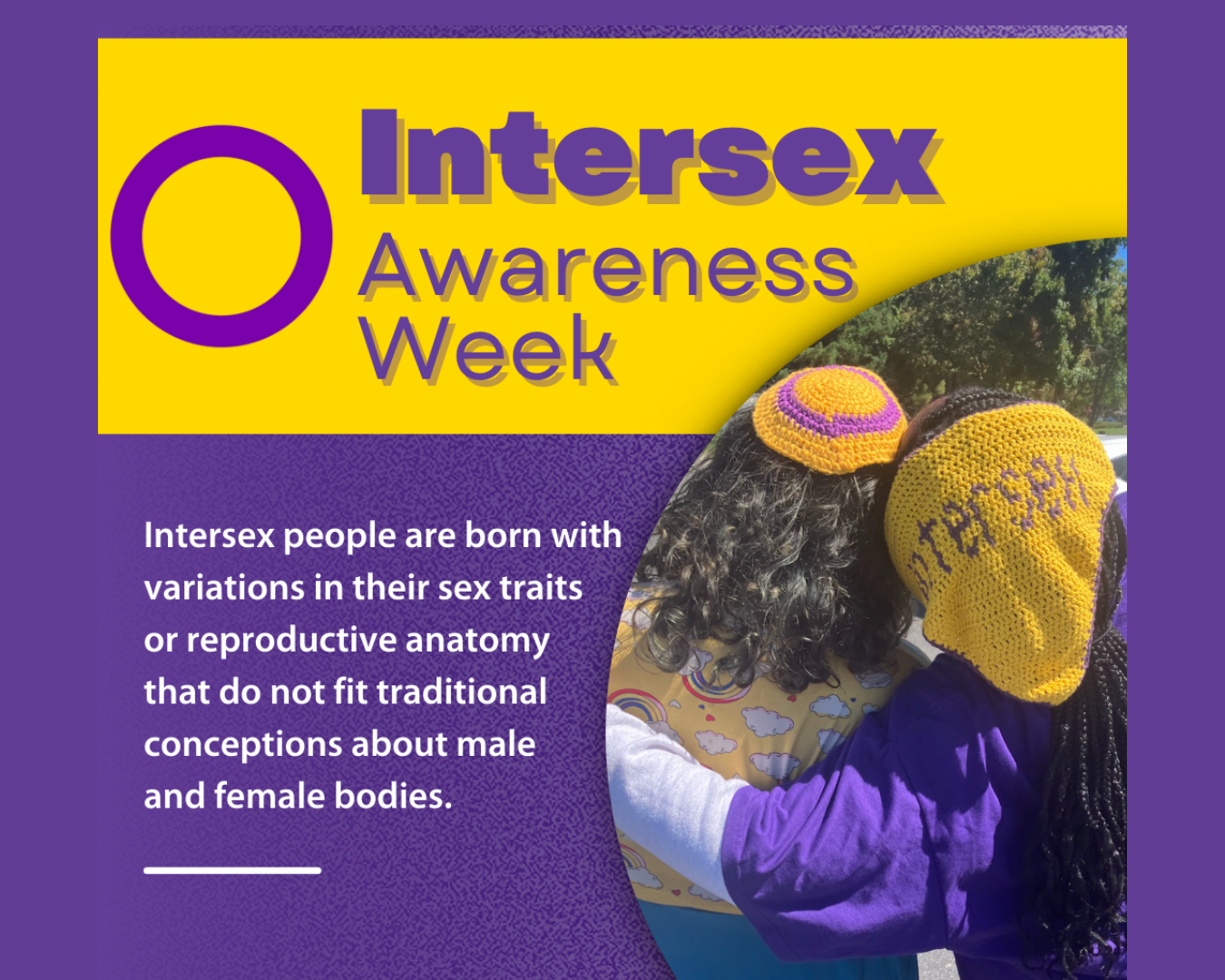
As we honor Intersex Awareness Day in partnership with interACT, it’s important to understand that the needs and the struggles of trans and intersex people are deeply intertwined. Over the last few years, we have seen an increase in dangerous anti-trans rhetoric and legislation that has directly attacked our basic rights. The same bills intended to target and eliminate transness also harm intersex people.
What does intersex mean?
Intersex describes people with variations in their sex traits such as chromosomes, hormones or reproductive anatomy. Watch this video to learn more about what it means to be intersex.
Intersex people are more common than you might think! There are over 40 different types of intersex variations, and intersex people make up about 2% of the population. To put this in perspective, that’s the same amount of people who have red hair.
Intersex people face not only discrimination, but also medically unnecessary and nonconsensual surgeries as babies or children. These harmful interventions are considered by many organizations and the United Nations to be human rights violations.
What’s the difference between being intersex and being transgender?
Intersex is different from transgender. Transgender people have a different gender identity than they were assigned at birth. Intersex people are born with bodily differences in their sex traits. Intersex people may also be transgender. Some intersex people have a different gender identity than they are assigned at birth because they were forcibly assigned the wrong sex through surgery without their consent.
Most children with intersex anatomy, regardless of how their bodies look, are raised in either male or female gender roles. And many intersex people do grow up with a gender identity that aligns with how they were raised. However, intersex people may also grow up to realize that the gender they were raised as was wrong for them. In this way, a person can be both intersex and transgender. You can be an intersex man, intersex woman, intersex nonbinary person, or none of the above. In fact, there are higher rates of trans identities among intersex people than among the rest of the population. In this podcast episode, interACT youth activist Mari Wrobel talks about being both trans and intersex.
How does transphobia harm intersex people?
Intersex people face human rights violations rooted in transphobia, especially medically unnecessary “corrective surgeries” to change the appearance of an infant’s sex. Fear of queer and transgender people causes many of the problems that intersex people face. As the artist Alok and the academic Kyla Schuller explain, the ideas that cause these fears—that there are two rigid and “opposite” sex categories with anatomy and gender roles that go with them—come from racism and eugenics movements in Europe and the United States. These ideas, and the unnecessary interventions that they lead to, are deeply harmful to intersex people. Intersex activist Morgan Beck, one of the leaders of the 1996 protest, was forced to undergo a surgery that would supposedly make her “normal.” Instead, it changed “a perfectly healthy seven-year-old girl into a woman who feared her own body and hated herself for being different.”
Alarmingly, these surgeries are specifically approved by most bills that aim to strip away rights to gender-affirming care for trans teens.This kind of legislation lets the state take over the doctor’s office, attempting to force everyone into restrictive sex and gender boxes. And intersex girls and women of color, who already face inappropriate scrutiny of their bodies in schools and sports, are especially harmed by these bans.
Every person should have control over their own body and their own future. No intersex child should be forced into treatment that they don’t need—and no trans youth should be denied the care that helps them thrive. No one gets to decide what our bodies look like, or what our gender identity means. Those choices belong to us!
What’s the history of trans and intersex solidarity?
In the mid-1990s, writer and activist Riki Anne Wilchins was pushing for greater understanding of transgender identity and for trans people to be protected from discrimination. Riki got involved with the struggle for autonomy for intersex people after meeting bo laurent (also known by her pseudonym Cheryl Chase). Riki was deeply impressed by bo’s moral clarity and deep medical knowledge, saying that “bo was leading a revolution on her own.” bo was the first person to see the harm that intersex people suffered as a political issue. Riki saw many similarities with the trans community’s struggle to live freely and access necessary medical care without being forced to conform to the expectations of gatekeepers.
Intersex activists saw the success that gay and trans activists had in pushing the psychiatric establishment toward actually addressing the needs of trans people, rather than stigmatizing queerness or gatekeeping trans healthcare. So in 1996, Riki joined intersex activists Max Beck and Morgan Holmes, among others, to use those tactics and protest in front of the American Academy of Pediatrics. According to Morgan Holmes, the group “unfurled our banner out front of the Boston Convention Centre, handed out leaflets, and spoke personally for hours with the clinicians, surgeons, nurses, and social workers who were attending the convention. There were some who simply dismissed us, but there were a few surgeons and pediatricians who actually stopped to listen.”
There was an enormous need to educate the public and push the medical establishment toward better treatment of intersex people, where patients are given full information and support to make their own decisions. As Max Beck wrote, “lack of education and counseling [for intersex people] too often leads to a life-threatening shroud of silence, secrecy, and self-hatred.”
Breaking that silence was the first step toward greater autonomy and self-love rather than shame. Today, intersex activists continue this work to educate the public and the medical establishment. Trans and intersex solidarity shows that everyone has their own journey to find what feels right in their body. Bans on trans healthcare and forced interventions for intersex people just create harmful barriers to our ability to live safely and freely in our bodies. There are so many ways to be a woman, a man, or a nonbinary person—and everyone deserves to live as their authentic selves.
Explore related topics


Stay Informed
Subscribe to our newsletter to get the latest news and opportunities for action delivered straight to your inbox.
Subscribe